Numerous research papers have been published at home and abroad on the harmful effects of tobacco on health risks. Several organizations in Bangladesh have been conducting multi-faceted activities to prevent tobacco for about a decade and a half. However, there is question about the extent to which the environment, biodiversity, and marginal people related to the tobacco life cycle are evaluated in their research activities. According to several published reports, the threat to biodiversity and climate change through the life cycle of tobacco and that should not be neglected. This issue requires a whole of government as well as society approach and engagement to lessen the negative impact of tobacco product.
The circular economy for environment: Before exploring the direct harmful effects of the tobacco life cycle, it’s crucial to consider the broader context of the global economic cycle. The circular economy, built on progressive design principles encompassing both technical and biological cycles, presents a notable departure from the predominantly linear structure of the global economy. A mere 8.6% of materials extracted from nature find their way back into the economic cycle, contributing significantly to biodiversity loss and water stress, with roughly 90% of these issues attributed to resource extraction and processing. Embracing circular design becomes imperative as it aims to disentangle economic activities from excessive resource exploitation and consumption, offering a promising avenue to address key stressors that threaten biodiversity lead to disruption of ecological functions and services and contributes to climate change ultimately. Besides, by tackling the elimination of waste and pollution, extending the use of products and materials, and regenerating natural systems, the circular economy can make significant contributions to biodiversity conservation. It can aid in reducing environmental pressures caused by resource extraction, production, consumption, and waste generation, all of which will ultimately benefit nature. Furthermore, the practices that endanger the future of our natural heritage and capital, and take decisive action toward sustainable management of our ecosystems and biodiversity as an engine of economic growth and social equity. In addition, the Sustainable Development Goals (SDGs) show that health cannot be considered in isolation from a host of other factors, of which the environment is one. In addition, leading to between 5%. Global deforestation, and produces more than 2 million tons of solid waste. Global tobacco production 1995 to 2015 deposit a total of 45 million tons of tones of solid waste, 6 million tons of nicotine waste, and over 4 million tons of chemical waste.
Tobacco life cycle and environment: The life cycle of tobacco products poses a well-documented threat to global health and the environment, particularly in low-income and middle-income countries that are major producers and manufacturers. Extensive land use for tobacco plantations, leading to deforestation, accounts for 4.3 million hectares and contributes to 5% of global deforestation annually. The tobacco industry’s annual greenhouse gas emission of 84 megatons of carbon dioxide equivalent significantly contributes to climate change. Agrochemicals used in tobacco cultivation harm land, water, and biodiversity, with 22 billion liters of water used annually. Similarly, tobacco plants absorbs phosphorus, potassium and nitrogen more than any other crops, which decrease soil fertility than any other cultivating crops. Topping and suckering are two types of specific cultivation methods use to gain high level of nicotine and more leaves that also reduce the soil fertility. Beyond smoking, tobacco products contribute to air pollution and waste, emitting 26,000 tons of CO2 and 52,000 tons of CH4 yearly. Cigarette waste, especially butts, represents a major environmental concern, comprising 25-40% of all litter and containing harmful chemicals. Emerging products like e-cigarettes add to the environmental challenges, contributing to electronic waste and highlighting the need for responsible waste management. Additionally, tobacco cultivation poses health hazards for farmers, including pesticide exposure and nicotine poisoning, while economically, it often proves unprofitable for many farmers, perpetuating poverty in tobacco-dependent regions. Solid waste, 6 million tons of nicotine waste, and over 4 million tons of chemical waste.
Tobacco status in Bangladesh: Tobacco farming in Bangladesh has resulted in severe environmental consequences, impacting land, water, and air. Despite regulatory efforts, insufficient monitoring and enforcement have led to environmental degradation and public health concerns. The cultivation of tobacco challenges in remote areas, has caused forest ecosystem destruction, habitat loss, harm to domestic animals, and induced soil erosion, water pollution, and air pollution through practices like excessive plowing and pesticide use as well as widespread negative impacts on traditional agro-practices particularly on the Chittagong Hill Tracts (CHTs), the ecological health of the Halda River. Social issues, including drug addiction and conflicts among tobacco workers, as well as parts of a broader regional context with proximity to India and Myanmar highlight the need for urgent action. The tobacco industry’s contribution to deforestation, greenhouse gas emissions, and marine pollution underscores the importance of fertile land for quality tobacco leaf production.
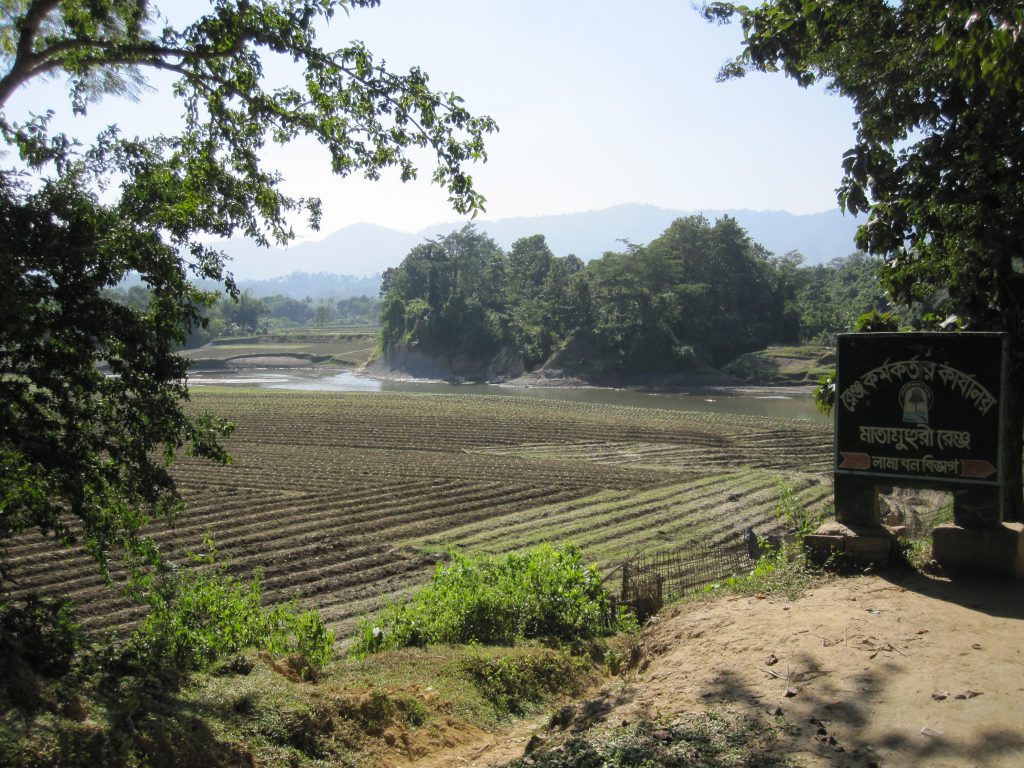
In Bangladesh, tobacco farming was introduced as a cash crop in the mid-1960s in the Teesta silt of the Rangpur region. The expansion of tobacco production in Bangladesh, initiated by the British American Tobacco Company in Rangpur in the fertile Teesta silt in the early 1970s, later on moved to Kushtia for the Gangetic Floodplain and then to the CHTs mostly for the fertile riverbed of Matamuhuri in the early 1980s, and alternatives tobacco companies such as Dhaka Tobacco (in joint venture with Philip Morris International), Abul Khair and Akij Tobacco joined later. Now, Bangladesh ranks 14th for area under tobacco, 12th for production in quantity (Tobacco cultivation in 20119-2020 Fiscal= Area Acres: 100006; Production M. Ton: 85852), and has a share of 1.3% of global tobacco production. This expansion has led to deforestation, pesticide overuse, land degradation, and water pollution, with approximately 30% of the country’s deforestation linked to tobacco cultivation. River-based cultivation over five decades has encroached upon fertile lands, emphasizing the role of fertile soil in quality tobacco leaf production. The corporate-driven expansion, coupled with agro-chemical-intensive practices, has introduced an ‘alien invasive species’ impacting agro-biodiversity, water and soil quality, biodiversity, and traditional agro-practices without investors contributing to these acquisitions.
Research gaps exist regarding specific linkages influencing tobacco growers and users, their opinions, and responses to socio-economic development through alternative income resources and biodiversity conservation. Addressing these gaps can provide valuable insights, contributing to a holistic approach to tobacco control, community development, and biodiversity conservation. The expansion of tobacco production in specific regions has transformed diverse food crop regions into tobacco-dominated areas, resulting in soil and water contamination, reduced fertility, and pollution. The intensive chemical requirements of tobacco cultivation, including exacerbate environmental tolls, stressing ecosystems.
Overall, the shift in tobacco production poses socioecological consequences, linked to deforestation, soil degradation, groundwater destruction, over-exploitation, biodiversity loss, and habitat fragmentation. The multifaceted impacts of tobacco cultivation specifically in developing and poor countries underscore the urgent global need for reevaluation, sustainable alternatives, and heightened awareness of the ecological consequences of the tobacco industry. Therefore, the necessity for urgent action to address environmental and health challenges posed by tobacco cultivation, focusing on sustainable alternatives and responsible agricultural practices
Tobacco control policy in Bangladesh: Sustainable change involves community empowerment and supporting the local implementation of Sustainable Development Goals. In this circumstances, Socioeconomic Impacts of Tobacco Cultivation, Community Health and Tobacco Control, Community Development Initiatives, Land Use Planning and Policy Analysis, Alternative Livelihoods and Sustainable Agriculture, Local Knowledge and Traditional Ecological Wisdom, Biodiversity Conservation, and Climate Resilience and Sustainability offers a rich research opportunity to quite tobacco ultimately. The time has come to think, act and cooperate for a healthy life and a bright future through socio-economic development through eco-friendly management. Therefore, by recognizing a multidisciplinary and integrated approach of tackling the complex challenges posed by tobacco use, community well-being, and obstacles for biodiversity conservation and leveraging community strengths, this proposed research has the potential to bring about transformative positive change at the individual, community, and environmental levels. Once people were not very conscious about health and environment, then tobacco was highly valued as a cash crop. With the passage of time, the depth of people’s thinking about their own existence and future generations has increased. However, some money-grubbing people are directly and indirectly involved in tobacco cultivation and consumption by luring the poverty-stricken and ignorant farmers in various ways and even holding them hostage. World No Tobacco Day 2023 will serve as an opportunity to mobilize governments and policymakers to support farmers under slogan “Grow food, not tobacco” to switch to sustainable crops through creating market ecosystems for alternative crops and encourage farmers globally to commit to shifting away from tobacco growing, and implementation of measures for the creation of completely smoke-free environments. In addition, according to Consolidated Smoking and Tobacco Products Usage (Control) Act, 2005 (Act No. 11 of 2005, as amended by Act No. 16 of 2013). The Bangladesh Government shall implement several evidence-based strategies can help prevent and reduce tobacco use.
The European Union, France, and specific U.S. localities exemplify the recognition of the need for stringent regulations on tobacco, emphasizing the potential for simultaneous progress in safeguarding both the environment and public health. Consequently, the efficacy of sustainable tobacco control hinges on promoting transformative change in alignment with Sustainable Development Goals and facilitating the shift of farmers from tobacco to sustainable crops. To achieve global replication, stakeholders, both governmental and non-governmental, should prioritize tailored interventions that integrate health and environmental considerations. Adopting the evaluation framework of existing tobacco control laws, such as the Consolidated Smoking and Tobacco Products Usage (Control) Act, is crucial for addressing socioeconomic impacts, establishing smoke-free environments, promoting biodiversity conservation, and implementing dedicated cessation programs. Collective action is paramount, requiring a steadfast commitment to environmental education, training, and alternative rehabilitation. Embracing these recommendations can position the initiative as a global standard for addressing similar challenges and contributing to a healthier, more sustainable future.
Information resources:
Aka, A.M. 2021. Time to find better alternatives to tobacco farming. https://www.thedailystar.net/opinion/news/time-find-better-alternatives-tobacco-farming-2049365
Akhter, F. 2018. Bangladesh tobacco ruins soil and water along Matamuhuri river. https://unfairtobacco.org/wp-content/uploads/2018/12/Akhter_Unfairtobacco_Bangladesh_pesticide-pollution.pdf
Ali, M.Y., Shahrier, M., Kafy, A.A., Ara, I., Javed, A., Fattah, M.A., Rahaman, Z.A. and Tripura, K., 2023. Environmental impact assessment of tobacco farming in northern Bangladesh. Heliyon, 9(2):e14505
ASH. 2022. Tobacco and The Environment. https://ash.org/pollution/
BBS. 2020. Bangladesh Bureau of Statistics (BBS) Statistics and Informatics Division (SID) Ministry of Planning Government of the People’s Republic of Bangladesh Yearbook of Agricultural Statistics-2020.
Bovarnick, A., Alpizar, F., Schnell, C., Editors. The Importance of Biodiversity and Ecosystems in Economic Growth and Equity in Latin America and the Caribbean: An economic valuation of ecosystems, United Nations Development Programme, 2010
CCE. 2023. Quit with Confidence: Deciding to quit. https://www.canada.ca/en/health-canada/services/smoking-tobacco/quit-smoking.html
Conradi, M. and Sánchez-Moyano, J.E. 2022. Toward a sustainable circular economy for cigarette butts, the most common waste worldwide on the coast. Science of the Total Environment, 847, p.157634.
Das, B.K., Koley, N.J. and Uddin, S.A. 2015. Environmental Impacts of Tobacco Cultivation in Bangladesh: A Review of the Literature. YPSA-YOUNG POWER IN SOCIAL ACTION, 5(1), p.104.
Drope, J., Li, Q., Araujo, E.C., Harimurti, P., Sahadewo, G.A., Nargis, N., Durazo, J., Witoelar, F. and Sikoki, B.S. 2018. The economics of tobacco farming in Indonesia. The World Bank: Washington, DC, USA. https://documents1.worldbank.org/curated/en/161981507529328872/pdf/120307-REVISED-PUBLIC-WBGIndoEconomicsTobaccoFarming.pdf
Faysal, B. 2022. Containing spread of tobacco cultivation. https://today.thefinancialexpress.com.bd/editorial/containing-spread-of-tobacco-cultivation-1651069301.
Geist, H.J. 2021. Tobacco and deforestation revisited. How to move towards a global land-use transition?. Sustainability, 13(16), p.9242.
Hendriks, N. 2023. A Life Cycle Assessment on the Biodiversity impact of SDG equity funds. https://umu.diva-portal.org/smash/get/diva2:1789514/FULLTEXT01.pdf
Hussain, M., Zaidi, S.M.H., Malik, R.N. and Sharma, B.D. 2014. Greenhouse gas emissions from production chain of a cigarette manufacturing industry in Pakistan. Environmental research, 134, pp.81-90.
IIC. 2022. The Circular Economy: A boon for Biodiversity Conservation? https://insights.issgovernance.com/posts/the-circular-economy-a-boon-for-biodiversity-conservation/
Jasim, E.H. 2022. Tobacco – the silent environment killer! https://bangladeshpost.net/posts/tobacco-the-silent-environment-killer-86646
Jeswani, H.K., Hellweg, S., and Azapagic, A. 2018. Accounting for land use, biodiversity and ecosystem services in life cycle assessment: impacts of breakfast cereals. Science of the Total Environment, 645, 51-59. Advance online publication. https://doi.org/10.1016/j.scitotenv.2018.07.088
Jew, E.K., Dougill, A.J. and Sallu, S.M. 2017. Tobacco cultivation as a driver of land use change and degradation in the miombo woodlands of south‐west Tanzania. Land Degradation & Development, 28(8): 2636-2645.
Kutub, M.J.R. and Falgunee, N. 2015. Environmental degradation due to tobacco cultivation in Bangladesh: A case study of Doulathpur, Kushtia. Geografia, 11(7): 1-8
Lecours, N., Almeida, G.E.G, Abdallah, J.M., Novotny, T.E. 2012. Environmental health impacts of tobacco farming: a review of the literature. Tob Control Mar 21(2):191–196. https://doi.org/10.1136/tobaccocontrol-2011-050318 PMID: 22345244
MacDonald, M. 2022. Climate Resilient Livelihood Improvement and Watershed Management in CHT Sector Project Supplementary Document – Output 3: Agriculture production, storage, processing and marketing improved. https://www.adb.org/sites/default/files/linked-documents/54047-001-ld-11.pdf
Masanotti, G.M., Abbafati, E., Petrella, E., Vinciguerra, S. and Stracci, F. 2019. Intensive tobacco cultivations, a possible public health risk?. Environmental Science and Pollution Research, 26:12616-12621.
Mowbray, S. 2022. Tobacco: Vaping and smoking drive environmental harm from farm to fingertip.
Novotny, T.E. and Zhao, F. 1999. Consumption and production waste: another externality of tobacco use. Tobacco control, 8(1): 75-80.
NTCC (National Tobacco Control Cell). 2022. S, R, O No. 198-Act/2022. Read with Section 16, Section 15A of the Smoking and Use of Tobacco Products (Control) Act, 2005 (Act No. 11 of 2005). https://ntcc.gov.bd/ntcc/uploads/editor/files/NTCC_Rules-2022.pdf
PAHO. 2022. Tobacco and its environmental impact: an overview. https://www.paho.org/en/documents/tobacco-and-its-environmental-impact-overview
TIO. 2023. Tobacco and the environment. https://truthinitiative.org/research-resources/harmful-effects-tobacco/tobacco-and-environment
TTO. 2022. Tobacco and the Environment. https://tobaccotactics.org/article/tobacco-and-the-environment/
UNCCD. 2021. Sustainable alternatives to tobacco growing for health and land. https://www.unccd.int/news-stories/blogs/sustainable-alternatives-tobacco-growing-health-and-land
UNEP. 2023. UNEP, WHO partner to combat tobacco industry’s impact on environment. https://www.unep.org/technical-highlight/unep-who-partner-combat-tobacco-industrys-impact-environment
WHO (World Health Organization). 2017. Tobacco Control for Sustainable Development. https://www.who.int/southeastasia/publications-detail/tobacco-control-for-sustainable-development
WHO (World Health Organization). 2022. Tobacco’s Threat to The Environment. https://cdn.who.int/media/docs/librariesprovider2/euro-health-topics/tobacco/tobacco-env-factsheet-eng.pdf?sfvrsn=1b9ced39_1&download=true
WHO (World Health Organization). 2023. Tobacco control. https://www.paho.org/en/topics/tobacco-control